
Parasite Hiding in Human Brains Runs Complex Survival Operation

Nadia Chen
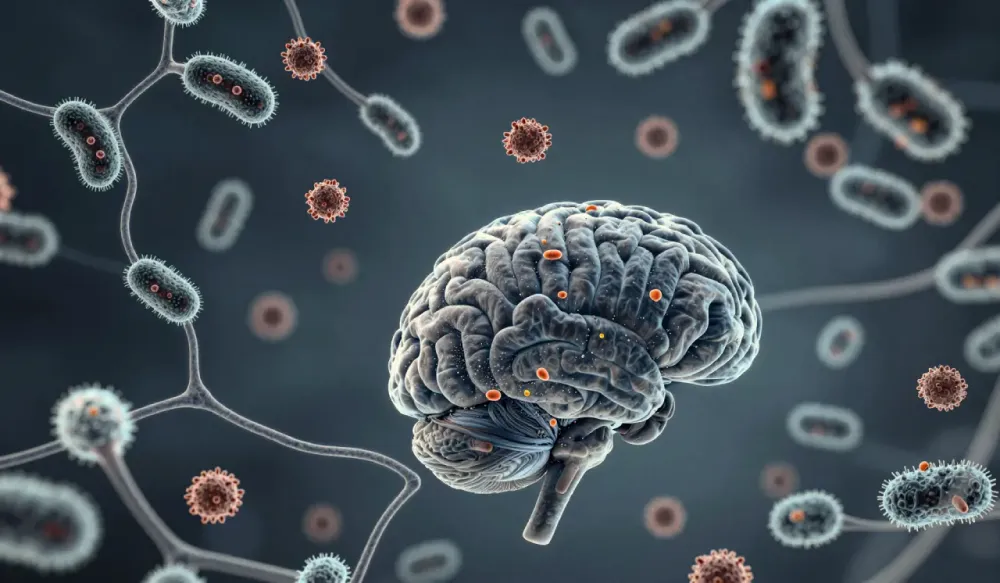
A parasite harbored by billions of humans is not inactive. Inside the brain, it quietly orchestrates a complex survival strategy that scientists are only beginning to understand. New research reveals the hidden life of Toxoplasma gondii, a common infection long considered dormant.
For decades, the scientific consensus held that this parasite formed inert cysts. These were seen as biological vaults holding a single, uniform type of organism. The discovery that these cysts are active hubs of complexity shatters that old model.
This finding explains why infections persist for life and why treatments have failed. It also opens a new front in the fight against a stealthy global pathogen. The implications for medicine are profound and immediate.
The Dormant Lie Is Over
The story of Toxoplasma gondii is one of silent ubiquity. Up to a third of the world's population is estimated to carry it. People typically contract it from undercooked meat, contaminated soil, or contact with cat feces.
In healthy individuals, the infection often causes no noticeable symptoms. The parasite's genius lies in its evasion strategy. It retreats into microscopic cysts, primarily in brain and muscle tissue, to hide from the immune system.
These cysts were thought to be storage units for a sleeping form called bradyzoites. The new research from UC Riverside proves this is a dangerous oversimplification. The cyst is not a tomb; it’s a command center.
A Microscopic Metropolis Revealed
Using advanced single-cell analysis, researchers peered inside these cysts. They found a bustling microscopic metropolis. Instead of one type of bradyzoite, they identified at least five distinct subtypes.
Each subtype appears to have a specialized role. Some are dedicated to long-term survival within the protective cyst wall. Others are primed for eventual reactivation, waiting for a signal to burst forth and cause disease.
This functional division of labor is a survival masterstroke. It ensures the parasite population is ready for any scenario, from prolonged hiding to aggressive spread. The cyst is a carefully managed colony, not a collection of identical sleepers.

Rewriting the Parasite's Life Cycle
For years, textbooks presented the Toxoplasma life cycle as a simple two-stage switch. The fast-moving, disease-causing tachyzoite converts into the dormant bradyzoite inside a cyst. This model is now obsolete.
The new research reveals a nonlinear, complex developmental pathway. Within the cyst, bradyzoites differentiate into specialized subsets. This happens in response to the pressures of the host's immune system and the local cellular environment.
This complexity mirrors that of highly organized multicellular organisms. It suggests the parasite has evolved sophisticated mechanisms to manage its population. Understanding this internal hierarchy is crucial for targeting it effectively.
Breaking Through Research Barriers
This discovery was made possible by overcoming significant technical hurdles. Studying cysts has been notoriously difficult. They form slowly and are buried deep within tissues like the brain.
Most lab research focused on the easily grown tachyzoite form. The chronic cyst stage remained a black box. The UC Riverside team used a mouse model that closely mirrors natural human infection.
They isolated thousands of cysts from mouse brains. By breaking them open and analyzing individual parasites with single-cell RNA sequencing, they captured a true snapshot of chronic infection. This method bypassed the limitations of artificial lab cultures.
The Direct Path to Better Treatments
Current anti-toxoplasma drugs have a major flaw. They only target the fast-replicating tachyzoite form responsible for acute illness. They are completely ineffective against the bradyzoites sealed inside cysts.
This is why infections last a lifetime. Medications can suppress symptoms during reactivation but cannot provide a cure. The cyst has been an impenetrable fortress for pharmacology.
The new map of cyst interior changes the game. By identifying the specific parasite subtypes primed for reactivation, scientists now have precise targets. Future drugs could be designed to disrupt the cyst's internal organization or eliminate the most dangerous resident subtypes.
A Silent Threat with Loud Consequences
The public health implications are significant. For most, toxoplasmosis is a silent passenger. For the immunocompromised, reactivation can cause life-threatening brain inflammation or retinal damage.
Congenital toxoplasmosis, where a mother passes the infection to a fetus, remains a serious cause of birth defects. The persistence of cysts also creates a vast reservoir for continued transmission through the food chain.
This research reframes our entire understanding of the infection. The cyst sits at the heart of the parasite's life cycle, and that makes it the most promising target for future treatment. Eliminating the cyst is the only path to a cure.
The battle against this common parasite has entered a new phase. Science has finally uncovered its secret operation manual. The next step is to use that knowledge to shut it down for good.
Sources
- Bradyzoite subtypes rule the crossroads of Toxoplasma developmentOriginal study by Ulu et al., published in Nature Communications (2026). Lead researchers: Emma H. Wilson and Michael W. White, UC Riverside.